Ball Ground roofing built for ridge-top weather
Ball Ground stayed a quiet farm town while the rest of Cherokee County filled in. Its historic downtown Main Street kept its scale, the acreage kept its fences, and the growth stayed politely to the south. That era is ending. Craftsman-style subdivisions are rising alongside the old farmhouse properties, and north Cherokee's higher ground, with its long exposed ridgelines, is finally getting the attention it deserves. Roofs up here work harder than roofs in the valley towns, and they earn a contractor who respects that. Best Woodstock Roofer is that contractor, a local crew that brings free inspections, honest written quotes, and GAF and CertainTeed materials to every Ball Ground roof.
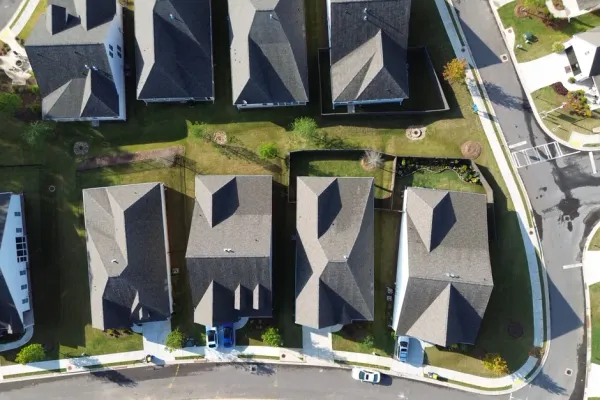
Small town, open sky, and roofs that face weather head on
Elevation is the quiet variable in Ball Ground roofing. The town sits on some of Cherokee County's higher ground, and plenty of its homes ride ridgelines with nothing upwind but sky. Storms that lose steam over sheltered subdivisions farther south arrive here at full strength, and the wind keeps working between storms too. Shingle edges, ridge caps, and flashing take a steady beating that valley roofs never experience.
The housing mix runs wide: century-adjacent farmhouses on acreage, in-town homes near the historic Main Street blocks, and new craftsman-style subdivisions filling in the gaps. Our crew handles all three without treating any of them as an afterthought, bringing the same GAF and CertainTeed systems, free inspections, and written itemized quotes north that homeowners get in Woodstock. The drive up I-575 is short. The standard does not change with the mile marker.
Wind-first specifications for exposed lots
On ridgeline properties, fastening schedules, sealed starter courses, and ridge cap attachment decide how a roof survives a gusty spring. Every Ball Ground quote is written against the lot's actual exposure, not a generic subdivision template.
One crew for the house, the barn, and the shop
Acreage properties rarely have just one roof. We quote the outbuildings in the same visit, matches materials where it makes sense, and sequences the work so a single mobilization covers the whole property.
Open ridgelines turn a gusty day into an uplift test
Wind uplift is the defining force on Ball Ground's exposed lots. Air moving over a roof edge accelerates and pulls upward, and on a ridgeline with open fetch the pressure at rakes, ridges, and corners can multiply well past what the middle of the roof ever feels. Shingles fail there first: an aged adhesive strip lets a tab lift, the next gust drives rain beneath it, and the opening widens storm by storm. The countermeasures are specific and cheap relative to the damage. Six-nail fastening, ring-shank nails at edges, fully sealed starter strips at eaves and rakes, and mechanically fastened ridge caps rated for the exposure. When we inspect a Ball Ground roof, edge condition gets checked before anything else, because up here the edges tell the truth.
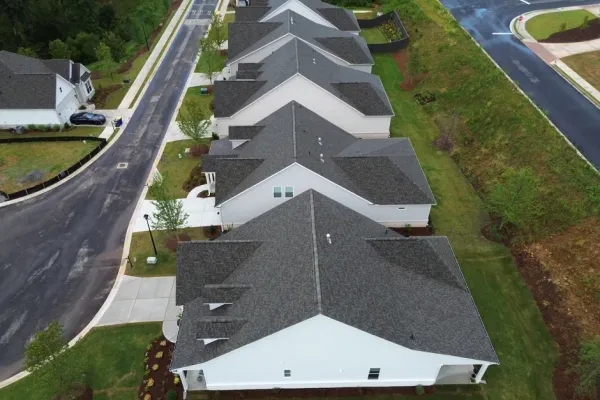
Farmhouse metal and craftsman shingle sit a mile apart
Few service areas mix roofing types the way Ball Ground does. The farmhouse properties often carry metal, some of it decades-old through-fastened panel that needs screws re-gasketed and seams watched, some of it ready to upgrade to standing seam that will outlast every fence on the land. A mile away, new craftsman-style subdivisions run architectural shingle with tidy gables and covered porches, where the work is warranty-grade installation and ventilation done right the first time. The crew moves between both worlds daily. Metal repair, panel replacement, and shingle systems all ride the same trucks, and quotes explain the honest trade-offs: standing seam costs more up front, sheds north Cherokee weather beautifully, and suits exposed sites; quality shingle systems deliver excellent value with warranty coverage up to 50 years on qualifying installations.

Acreage properties put more than one roof on the list
A Ball Ground address often means a house plus a barn, a workshop, a well house, or a carport, each with its own roof and its own stage of neglect. Outbuildings get skipped during storm claims because nobody photographs them, and they get skipped during maintenance because ladders come out for the house first. We walk the whole property. Storm documentation covers every structure so insurance scopes are complete, and repair quotes sequence the work sensibly: stop the barn leak that is rotting the loft framing now, schedule the shop's re-panel for fall, fold the well house into either visit. One mobilization instead of three service calls keeps costs down, and matching materials across buildings keeps the property looking like someone runs it, because someone does.

Hardwood leaf load never gives gutters an off season
North Cherokee's hardwood canopy is part of why people move toward Ball Ground and the countryside around Gibbs Gardens, and it is also why gutters up here fill faster than anywhere else we service. Oak and hickory drop leaves through fall, catkins and pollen mats through spring, and twigs all year, and on acreage lots the trees stand close enough to load a gutter run in a single windy weekend. Overflowing gutters rot fascia boards, stain siding, and dump water against foundations, then freeze into ice dams during cold snaps. The fixes stack: correctly pitched runs, downspouts sized for real storm volume, guards where the canopy justifies them, and cleanings scheduled to the property's actual tree load rather than a generic calendar.

Ball Ground has been north Cherokee County’s quiet corner for generations, a small town where the historic downtown Main Street still reads like the postcard and the properties around it still measure in acres. The quiet is getting company. Craftsman-style subdivisions have been filling in around town, buyers priced out of Woodstock and Canton keep looking north, and day-trippers stream toward Gibbs Gardens every spring bloom. Growth changes a town’s roofing profile fast: suddenly the same market holds sixty-year-old farmhouse metal, five-year-old architectural shingle, and everything between, all of it sitting on some of the most weather-exposed ground in the county. That mix is exactly the work this crew likes.
Leak calls, gutter runs, and the rest of the Ball Ground list
The everyday work in Ball Ground splits three ways. First, roof repair: wind-lifted shingles on exposed lots, aging pipe boots, farmhouse panel screws that have backed out and started weeping. Second, water management, where gutter installation sized for hardwood leaf load and real Georgia downpours saves fascia boards and foundations alike. Third, the airflow problems that hide in attics: roof ventilation corrections that stop summer heat from cooking shingles and winter moisture from rusting nail shanks. Bigger projects follow the same honest sequence, and if a replacement is on your horizon you can rough out the cost from your kitchen table before anyone climbs a ladder.
Roofing a new craftsman build is nothing like re-roofing a farmhouse
The new subdivisions and the old acreage ask opposite questions. On a recent craftsman build, the structure is sound and the material is young, so the job is verification: confirm the ridge vent is continuous, the valleys carry membrane, the flashing was installed rather than improvised, and document everything while the builder warranty still means something. On a farmhouse, the roof has usually outlived several owners’ repair philosophies. Tear-off reveals plank decking, layered patches, chimneys flashed in three different eras, and framing that a careful crew works around rather than through. New-build work rewards process. Farmhouse work rewards judgment. Pricing them from the same template shortchanges one owner or the other, which is why every Ball Ground quote here starts with a walk of the actual roof.
The north end of the county gets the same crew
Ball Ground anchors the top of the service map, with our crew covering Canton just down the corridor and Downtown Woodstock at the southern end of the county. Nothing thins out with distance: the free inspection, the written itemized quote, the GAF and CertainTeed materials, the workmanship warranty, and the magnetic nail sweep at cleanup all travel intact. Storm response reaches Ball Ground around the clock, which matters on ridge-top lots where a spring squall can turn a loose shingle into a wet ceiling overnight. When the weather has been loud, or the gutters have gone quiet because they are full, the number is (470) 777-7344 and the assessment costs nothing.
Does Ball Ground's elevation really change what my roof needs?
It changes the specification more than the product. Higher ground and open ridgelines mean stronger sustained wind and harder gust loading, so the details that are optional in a sheltered subdivision become mandatory here: six-nail fastening, sealed starter courses, rated ridge caps, and honest attention to flashing at every transition. Hail exposure is broadly similar to the rest of Cherokee County, but wind-driven rain finds weaknesses faster up here. An inspection tuned to exposure catches those weak points before the weather does, which is the whole reason to schedule one.
Is standing seam metal worth it on a Ball Ground farmhouse?
Often, yes. Standing seam suits exposed north Cherokee sites: concealed fasteners resist wind, panels shed rain and debris cleanly, and service life runs decades past asphalt with minimal upkeep. It also looks correct on a farmhouse in a way few materials manage. The trade-off is upfront cost, typically well above architectural shingle, and repair work that demands a crew comfortable with metal. If you plan to hold the property long term, the math tends to favor metal. If you might sell within a few years, quality shingle usually pencils better. We quote both honestly.
Will you come out for a small repair at the north end of the county?
Yes. Ball Ground sits at the top of the I-575 corridor the crew already works daily, so a lifted ridge cap, a leaking pipe boot, or a run of wind-torn shingles is a normal service call, never a favor. Small repairs get the same treatment as big projects: photos of the problem, a written price before work starts, matching materials, and a check of the surrounding area so the fix does not chase a symptom while the cause keeps leaking. Storm emergencies at the county's north end ring the same 24/7 line, (470) 777-7344.
What maintenance schedule makes sense for wooded acreage in Ball Ground?
Twice a year, tuned to the trees. A spring visit after the pollen and catkin drop clears gutters and checks for winter damage: lifted shingles, popped nails, flashing movement, ice dam residue at the eaves. A late-fall visit after leaf drop clears the runs again and confirms the roof is sealed before freeze-thaw season. Add a check after any storm that brings hail or serious gusts across the ridgelines. Owners who keep that rhythm on Ball Ground acreage almost never face surprise interior leaks, and their roofs reliably reach the far end of their service life.
How are the newer craftsman subdivisions in Ball Ground holding up?
Mostly well, with the usual production-build caveats. The architecture is roof-friendly: simpler gables and porch roofs are easier to flash and ventilate than sprawling custom rooflines. What deserves watching is the installation detail underneath, since ridge vent runs, soffit intake, and valley membranes vary house to house even on one street. A documented inspection in the first few years establishes a baseline, catches any builder shortcuts while warranties still apply, and gives you photos to compare against after every storm season. It is inexpensive insurance on the newest roofs in town.
The inspection is free, even at the county's north end
House, barn, shop, or all three, a Ball Ground roof deserves a straight assessment: photos of what is actually up there, a written itemized quote, and advice keyed to ridge-top exposure rather than a template. Run your own numbers first if you like, then put the crew on a ladder.
Not sure what a new roof runs? Estimate your roof cost in Woodstock, measured from satellite imagery, or run a storm & insurance damage check.