Chimney repair in Woodstock, GA that stops water at the brick
Most chimney leaks in Woodstock never announce themselves at the chimney. Water slips past a cracked crown or a loose piece of step flashing, runs down the framing, and shows up as a brown ring on a ceiling two rooms away. By then the leak has usually been working for months. Best Woodstock Roofer handles chimney repair for Cherokee County homeowners, covering the whole stack: flashing and counter-flashing, crown rebuilds and sealing, mortar joint repointing, cap and spark arrestor replacement, and chase cover work on sided chimneys. Every job starts with a free inspection and ends with photos of the finished repair.

One crew handles the flashing and the masonry above it
A chimney is the one spot on a Woodstock roof where two trades meet. Roofers handle the shingles and flashing. Masons handle brick, mortar, and crowns. When those trades work separately, the handoff point is exactly where leaks start, because each crew assumes the other checked it. Our crew treats the chimney as one system, from the cap down to the last course of step flashing. That matters in a town with both kinds of chimney: older masonry stacks on homes near the downtown Elm Street district, and framed, sided chases on the 1990s master-planned streets around Towne Lake and Eagle Watch. The failure points are different. The fix has to be matched to the construction, not copied from the last job.
The whole stack gets inspected, cap to counter-flashing
A proper chimney inspection works top down. The cap and spark arrestor get checked for rust and gaps. The crown gets probed for hairline cracks that pool water. Mortar joints get tested for depth of wear, and the step flashing and counter-flashing along the roofline get examined where sealant dries out and nails back out. On sided chases, the chase cover comes under particular scrutiny, since a rusted pan up there can drip for years before anyone notices. Skipping any one of these points is how a chimney gets "repaired" three times for the same leak.
Findings come back in writing before any quote
After the inspection you get photos of what was found, a plain explanation of what each item means, and a written price before any work starts. Some chimney problems need attention this season. Others can wait a year or two, and you deserve to know which is which. The free inspection carries no obligation, and the written estimate stays valid whether you schedule the repair next week or after the holidays. No one climbs down the ladder and improvises a number in the driveway.
Step flashing fails quietly under Woodstock's tree canopy
Flashing is the metal system that ties the chimney to the surrounding shingles: step flashing woven into each shingle course, counter-flashing let into the mortar joints above it, and a cricket behind wider chimneys to split the water flow. On Woodstock's heavily wooded lots, pine needles and oak litter pile up behind the chimney, hold moisture against the metal, and rot the sealant early. Heat swings do the rest, backing nails out and opening seams you cannot see from the ground. The lasting repair is mechanical, not cosmetic: new step flashing woven course by course into the shingles, counter-flashing embedded into ground-out mortar joints rather than smeared over with caulk, and a properly framed cricket where the roof geometry needs one. Surface-mounted flashing held on by roofing cement is the number one repeat offender we find on Cherokee County chimneys, and it is the first thing ruled out on every job.
Crowns crack first in Cherokee County's freeze-thaw swings
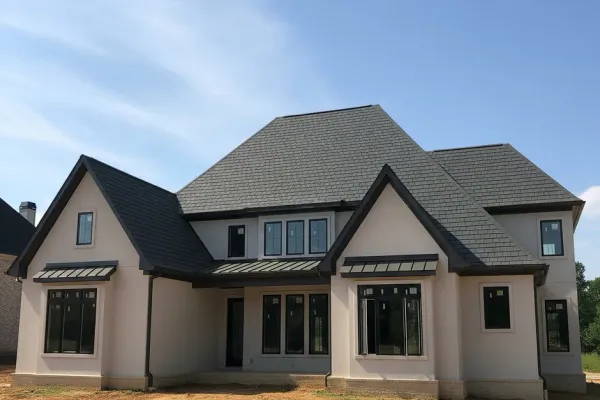
The crown is the sloped masonry cap that sheds rain off the top of the chimney. Georgia winters are mild, but Cherokee County still cycles above and below freezing dozens of nights each year, and that cycle is exactly what kills crowns. Water settles into a hairline crack, freezes, widens it, and invites more water the next night. Left alone, a cracked crown lets moisture soak straight down through the brick, which is why so many chimney leaks appear in February after a quiet fall. Minor cracking gets sealed with a flexible crown compound made for thermal movement, nothing like the rigid patch mortar that fails in a season. Crowns past saving get broken out and rebuilt with a proper overhang and drip edge so runoff clears the brick below. Either way the repair gets documented with photos, since nobody should take a contractor's word about something thirty feet in the air.
Mortar joints wear out long before the brick around them
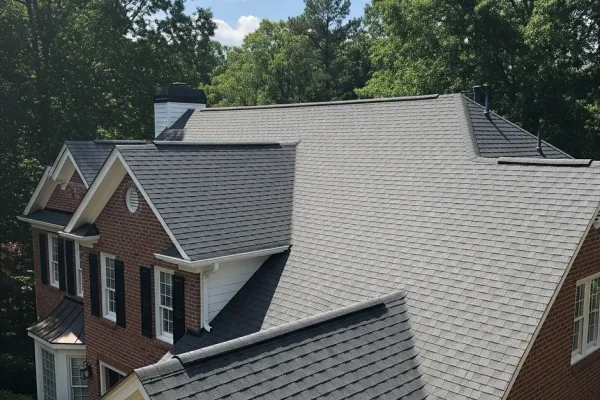
Mortar is designed to be the sacrificial part of a masonry chimney. It absorbs the movement so the brick does not have to, and after a few decades of Georgia humidity and thermal cycling it starts to recede, crumble, and channel water into the stack. White staining on the brick, called efflorescence, is the classic warning: it means water is already moving through the masonry and evaporating out the face. Repointing grinds the failed joints out to sound material, cleans them, and packs fresh mortar matched in color and hardness to the original. That hardness match matters more than most homeowners are ever told. Mortar harder than the surrounding brick transfers stress into the brick faces and pops them apart, a mistake that turns a few hundred dollars of joint work into brick replacement. Older stacks near downtown Woodstock get a softer blend for exactly that reason.
Sided chimney chases on 1990s homes hide the worst leaks
A large share of Woodstock's housing went up in the 1990s in master-planned neighborhoods around Towne Lake, and most of those homes have a framed chimney chase wrapped in siding rather than a brick stack. Up top sits a sheet metal chase cover, and the original builder-grade pans are now approaching thirty years old. They rust from the center out, right where water ponds, and the drip lands inside the chase where nobody sees it. The first visible symptom is often peeling paint or swollen trim a full story below, sometimes mistaken for a siding problem. Repair means a new chase cover in heavier gauge metal with a cross-break so water sheds off instead of ponding, storm collar and cap sealed around the flue, and any rotted framing or sheathing inside the chase replaced before it spreads into the roofline. It is one of the most common repairs in this part of Cherokee County, and one of the most misdiagnosed.
What chimney repair costs in Woodstock
Chimney work in Woodstock starts at $300 on our published price list, which covers the common single-item repairs: resealing flashing, installing a cap and spark arrestor, or sealing a sound crown. The inspection that scopes the job is free, with photos and a written estimate before anything is scheduled. Larger projects, a crown rebuild, deep repointing, a new chase cover with framing repair, are quoted in writing from what the inspection documents rather than from a guess over the phone.
When chimney damage extends into the surrounding shingles or decking, that portion is priced as roof repair, which starts at $499. If you are weighing a bigger question, whether the roof around an aging chimney is worth patching at all, you can price out a full replacement from your address before you ever talk to anyone. Financing is available on larger projects, and storm-related chimney damage often falls under homeowner’s insurance, which the crew documents for you from the first visit.
A Woodstock chimney repair, from first call to final photo
The process runs the same way whether you are off Towne Lake Pkwy or near downtown:
- Day one, the call. You describe what you are seeing, a stain, a smell, a piece of metal in the yard, and we schedule the free inspection, usually within a couple of business days.
- The inspection. The crew checks the cap, crown, mortar, flashing, and chase cover on the roof, then looks below the roofline in the attic for water tracks on the framing. Thirty to forty-five minutes, photos of everything.
- The written scope. You get the findings ranked: what is leaking now, what will leak soon, what is cosmetic. Prices are itemized so you can phase the work if you want.
- Repair day. Most single-item chimney repairs finish in one visit. Masonry work that needs cure time, like repointing or a crown pour, may take a return trip to seal and waterproof.
- Proof. Finished photos, warranty paperwork on the workmanship, and a straight answer on when the chimney should be looked at again.
No step gets skipped because the roof is steep or the chimney is tall. That is the point of sending an experienced roofing crew instead of a handyman with a tube of caulk.
Chimney trouble rarely stays at the chimney
Water that gets past a chimney does not stop there. It follows the decking downhill, wets the underlayment, and surfaces wherever gravity says, which is why a failed cricket often gets blamed on the shingle field below it. If a stain has already appeared, roof leak repair in Woodstock traces the full path of the water, not just the entry point. Storm-hit chimneys, a lightning strike, a fallen limb, a chase cover peeled up by straight-line wind, are handled through emergency roof repair with same-day tarping over the opening. And when flashing repair reveals wider shingle wear around the stack, general roof repair brings the surrounding field back to matching condition so the chimney work is not protecting a failing roof.
One system, one crew, one written scope. That is how a chimney repair in Woodstock stays fixed.
Fix the chimney while the weather is on your side
A chimney defect found in dry weather is a scheduled repair. The same defect found during a January soaker is a stained ceiling and an insurance conversation. Get the free inspection on the calendar, see photos of what is actually up there, and decide with real information.
Not sure what a new roof runs? Estimate your roof cost in Woodstock, measured from satellite imagery, or run a storm & insurance damage check.