Emergency roof repair in Woodstock, GA, answered around the clock
When a limb comes through the decking or a gust strips a slope of shingles, the clock starts. Every hour of open roof lets more water into insulation, drywall, and flooring, and the repair bill grows with it. Best Woodstock Roofer provides 24/7 emergency response across Woodstock and Cherokee County: heavy tarping anchored to sound framing, temporary dry-in that holds until permanent repairs, and photo documentation your insurance company will actually accept. Call (470) 777-7344 any hour. A person answers, asks the right questions, and gets a crew moving.
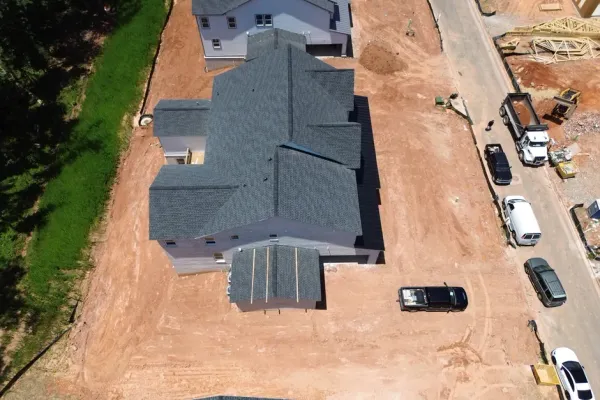
The first hours decide how expensive a roof emergency gets
Storm systems that hit Woodstock tend to build over the ridges northwest of town and roll in from the Lake Allatoona direction with straight-line wind out front. Homes up on Cherokee County's higher ground catch the strongest gusts, and the same hills that give Towne Lake its views give its roofs extra wind uplift on every storm. None of that is in your control. What is in your control is how fast the hole gets covered. Our crew runs storm response across Metro Atlanta, and we stabilize first and talk paperwork second, because a dry house makes every later decision cheaper. Same-day response covers Woodstock, Canton, and Holly Springs along the I-575 corridor.
The truck arrives already stocked for a wet roof
Emergency calls do not leave time for a supply run. Response vehicles carry reinforced poly tarps in several sizes, furring strips and cap nails for anchoring, synthetic underlayment, sheathing panels for punctures, and lighting for night work. That stock list sounds mundane until 11 p.m. on a Saturday, when the difference between a stocked truck and an empty one is water running down your stairwell for eight more hours. Crews also carry moisture meters, because knowing how far water has already traveled changes what gets protected first.
Insurance paperwork starts while the tarp goes down
Adjusters pay for what gets documented, not for what you remember. From the first visit the crew photographs the damage before touching it, timestamps every image, notes hail size and wind direction where evidence shows it, and keeps receipts for temporary protection, which most homeowner policies reimburse as mitigation. When your adjuster schedules the walkthrough, the crew meets them on the roof with the file in hand. Storm restoration on our price list is typically insurance-covered work, meaning many Woodstock families pay their deductible and little else.
Active water inside the house outranks everything else
Not every damaged roof is an emergency, and honest triage saves Woodstock homeowners real money. Water coming through a ceiling, a punctured deck, a tree resting on the structure, shingles stripped down to bare felt ahead of more rain: those cannot wait, and crews respond around the clock. A few cracked shingles found after a storm, with dry weather ahead, can usually wait for a scheduled repair at regular rates, and you will be told so on the phone. The call itself sorts it. You describe what you see, where the water is showing, and how the weather looks, and the dispatcher decides with you whether this is a tonight problem or a Tuesday problem. Nobody gets talked into midnight service for a daylight repair, because emergency response only works when it is reserved for emergencies.

A tarp holds only as well as the wood it is fastened to
There is a right way to tarp a roof, and it is not four bricks and hope. The damaged section gets cleared of debris, the tarp gets carried over the ridge so water cannot run underneath the top edge, and the perimeter gets rolled into furring strips screwed to sound decking outside the damage zone. Done that way, a tarp survives the next front instead of becoming a blue sail over GA-92. Wind exposure matters doubly here: Woodstock's ridgeline lots take gusts that flatland tarping jobs never face, so anchoring is spaced tighter and edges get doubled where the slope faces the weather. A properly installed tarp is rated in weeks, which is exactly the window needed for the adjuster visit, the material order, and a scheduled permanent repair. The crew will tell you its honest lifespan and put a return date on the calendar, not just drive away.
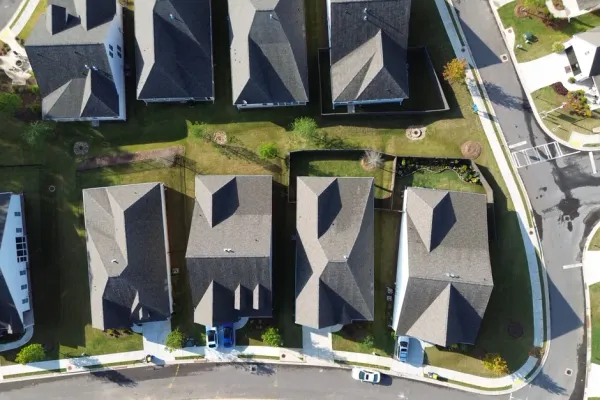
Dry-in buys weeks, not just a dry night
Tarping is the fastest protection, but some damage calls for a stronger temporary measure. When a limb has punctured the deck, the crew cuts back to sound wood and sheets the opening with new sheathing before anything else goes on. Torn or missing sections then get papered in with synthetic underlayment, fastened with cap nails on the same schedule used for permanent work. That combination, patch plus dry-in, sheds ordinary rain on its own and turns the roof back into a working system while shingle and material decisions get made properly. It also protects your options. A homeowner with a dried-in roof can take a week to compare a repair against replacement numbers without gambling on the radar. One with a leaking roof has to decide tonight, and rushed roof decisions are rarely cheap ones.

Photos taken the first night carry your claim later
Insurance disputes over storm damage usually come down to evidence, and evidence is best the night it happened. Before repairs start, the crew documents the scene: wide shots establishing which slopes took the hit, close-ups of impact marks and creased shingles, the debris field in the yard, water staining inside, and meter readings showing how far moisture traveled. Georgia policies give you a limited window to file, and adjusters give more weight to dated photos from the storm week than to anything reconstructed months later. All of it gets organized into a file you and your adjuster both receive, and the crew meets the adjuster on-site to walk the damage together. Homeowners who skip this step end up negotiating from memory. The ones who have the file usually just get paid.
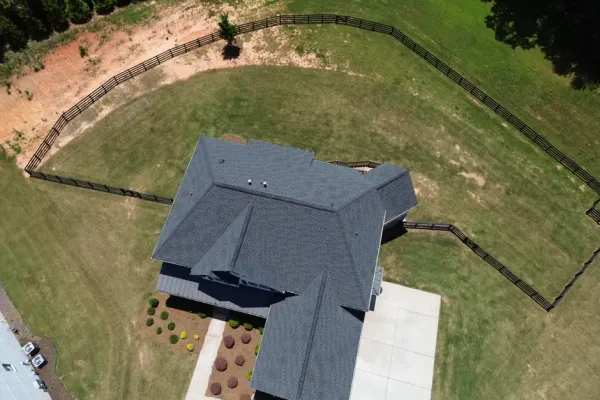
The first 24 hours after a Woodstock roof fails
Emergency response follows a sequence, and knowing it ahead of time takes some fear out of a bad night:
- Hour zero. You call (470) 777-7344. The dispatcher confirms whether this is an active emergency, walks you through immediate safety steps, and gives you an arrival window.
- On arrival. The crew checks structural safety first, especially with tree impacts, then documents the untouched damage with timestamped photos.
- Stabilization. Punctures get sheeted, stripped sections get dried-in with synthetic underlayment, and tarps go on over the ridge, anchored through furring strips into sound decking.
- Inside the house. Wet insulation gets flagged, moisture readings get recorded, and bulging ceilings get drained before they fall.
- Before the crew leaves. You have photos of the finished protection, a written scope of what permanent repair requires, and the start of your insurance file.
- The next morning. The claim call happens with evidence in hand, and the permanent repair gets scheduled on your timeline, not the weather’s.
That last point is the whole purpose of emergency work. A stabilized roof converts a crisis into an ordinary scheduling decision.
What emergency roof work costs in Woodstock
Emergency response is priced call-for-quote on our price list, because height, pitch, access, and decking condition genuinely change the work. The quote comes before the work does, and receipts are formatted for insurance mitigation reimbursement. The permanent follow-up is where standard pricing takes over: repairs start at $499, and full replacement starts at $2,999 when a storm finishes off a roof that was already near the end. If you want to sanity-check those numbers against your own address while you wait for the adjuster, the instant roof estimate tool gives you a starting range in about a minute. Free inspections apply to storm assessments like everything else, and financing is available when a deductible lands at a bad time.
After the tarp comes the real repair
Temporary protection is a bridge, and what is on the far side depends on what the storm did. Creased shingles, torn flashing, and isolated wind damage get resolved through standard roof repair in Woodstock with materials matched to the existing roof. Water that found its way in during the storm sometimes keeps showing up afterward, and roof leak repair traces those paths through the decking before they grow mold in the attic. Chimneys take their own kind of storm damage, from lifted chase covers to cracked crowns, and chimney repair closes that hole in the system. The crew that stabilized the roof scopes all of it in one written estimate, so the emergency ends with a plan instead of a stack of loose ends.
Storms off Lake Allatoona do not call ahead
Save (470) 777-7344 in your phone before you need it. If your roof is open right now, call instead of reading the rest of this site, and get a tarp between your house and the next cell. Assessment is free, the price comes in writing, and the paperwork for your insurer starts the same visit.
Not sure what a new roof runs? Estimate your roof cost in Woodstock, measured from satellite imagery, or run a storm & insurance damage check.